Martin Penzel
Thuringia State Institute for Agriculture and Rural Areas, Erfurt, Germany
Bridging Science and Practice: The Role of Applied Research as Interface Between Stakeholders in the Fruit Growing Sector
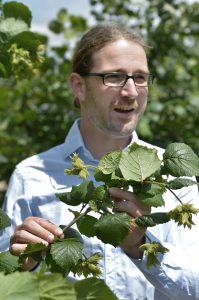
Martin Penzel is a horticultural engineer with over ten years’ experience of conducting experimental field and on-farm trials in tree fruit crops. He started his career with an internship at the Washington Tree Fruit Research Commission in 2011, where he learned how to organize field trials and collect data on apples, pears and cherries. He subsequently wrote his Master’s thesis on crop load management of apples, a topic he continued during his PhD studies at the Leibniz Institute for Agricultural Engineering and Bioeconomy in Potsdam and the Technical University of Berlin. For his doctoral research, Dr Penzel investigated fruit growth, gas exchange, and carbon balance of apples in order to develop a physiological model of the fruit-bearing capacity based on LiDAR-estimated canopy features. The project aimed to enable precise crop load management for individual trees in commercial orchards. Currently he and his team focus on optimising management and growing systems in tree fruit crops, particularly for stone fruit crops and hazelnuts. The research addresses efficient water and nutrient use under changing environmental conditions and enhance labour efficiency through modern planting systems. Dr Penzel also serves as contact for fruit growers within the agricultural administration of the German state of Thuringia. In this role, he acts as an interface between industry, administration, research, and the public. He also teaches horticultural technicians at the Technical School of Horticulture in Erfurt.
Dejan Perić
Faculty of Veterinary Medicine, University of Belgrade, Serbia
Organic Forms of Microelements - New Horizons in Modern Animal Nutrition
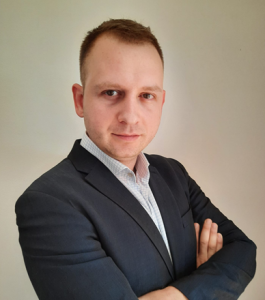
Dejan Perić was born on January 30, 1992 in Brčko, Republika Srpska, Bosnia and Herzegovina. The Faculty of Veterinary Medicine of the University of Belgrade finished on September 22, 2017. with an average grade of 9.68 (nine 68/100), receiving a certificate for the student of the generation. Since May 3, 2018, he has been engaged in the project of the Ministry of Education, Science and Technological Development “Selected biological hazards for the safety/quality of food of animal origin and control measures from farm to consumer” (TR 31034). In March 2019, he was elected to the position of Teaching Assistant at the Department of Nutrition and Botany. In July 2024, he defended his doctoral dissertation entitled: „Testing the effects of protected benzoic acid and chelated forms of copper, manganese and zinc on the health status and production performance of piglets“. In July 2025, he was elected to the position of Assistant Professor at the Department of Animal Nutrition and Botany, Faculty of Veterinary Medicine, University of Belgrade. He participates in teaching at the basic integrated and specialist academic studies of the Faculty of Veterinary Medicine in the subjects Animal Nutrition 1, Animal Nutrition 2 and Clinical pig dietetics.
Ivan Đurić
Leibniz Institute of Agricultural Development in Transition Economies (IAMO), Germany
Transforming Research Through Immersive Data Analytics
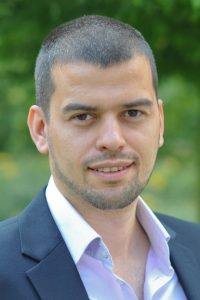
Dr. Ivan Đurić is a Senior Researcher and the XR Lab Coordinator at the Leibniz Institute of Agricultural Development in Transition Economies (IAMO, Germany). His current work focuses heavily on the application of immersive technologies and biosensor-based analytics, including eye-tracking, galvanic skin response, and virtual reality, to gain deep insights into consumer behaviour and innovation acceptance. By integrating these state-of-the-art tools with advanced econometric techniques, Dr. Đurić analyses complex decision-making processes in realistic and controlled environments. With a PhD in Agricultural Economics and over 20 years of professional experience, Dr. Đurić leverages the XR Lab’s fully mobile setup to conduct scalable data collection worldwide. He combines behavioural expertise with strong technical skills and a background in agricultural economics, and his research contributes to high-level projects funded by institutions such as EU HORIZON Europe and DAAD.